Super Safety Trigger Troubleshooting: Dead Trigger, Reset Failures & Fixes
The Super Safety runs reliably when the build is right. When it doesn't, the problem is almost always one of four things: buffer weight, lever orientation, lower compatibility, or an incompatible trigger. This guide walks through every common failure mode, what's actually causing it, and exactly how to fix it.
Work through this in order.
Most reset failures are a buffer problem, start there before pulling anything apart.
Problem 1: Trigger Doesn't Reset, Dead Trigger After Firing
This is the #1 Super Safety problem. Before doing anything else, check your buffer weight. A carbine buffer will cause dead trigger issues on almost every Super Safety build.
Symptom: You fire a round, the trigger goes dead. No reset. You have to manually rack the gun to get the next shot.
Most likely cause: Buffer too light
The BCG is cycling too fast for the lever to fully engage and disengage. The lever needs dwell time, a moment where the BCG is pushing it forward, to do its job. A light buffer (carbine or H1) lets the BCG slam back and return before the lever can complete its cycle.
Fix: Upgrade to an H2 buffer. If you're already on H2, try H3, especially if you're suppressed or running a short gas system.
Secondary cause: Lever installed backwards
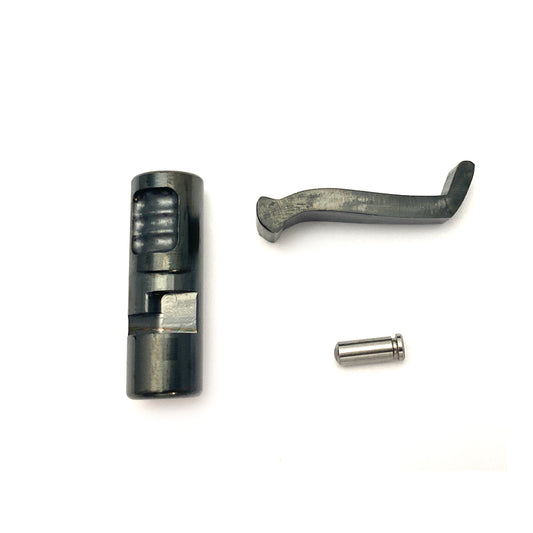
If the lever is pointing toward the magwell instead of the buffer tube, it can't properly engage the BCG as it cycles. The tip of the lever must point toward the buffer tube. The bend faces forward, toward the magwell.
Fix: Drop the pistol grip, pull the lever, flip it, reinstall. Takes two minutes. See the install guide for exact orientation reference.
Rare cause: Trigger not fully cut or wrong cut depth
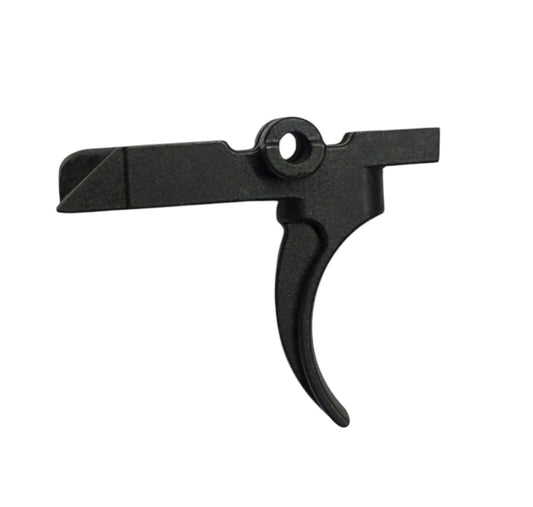
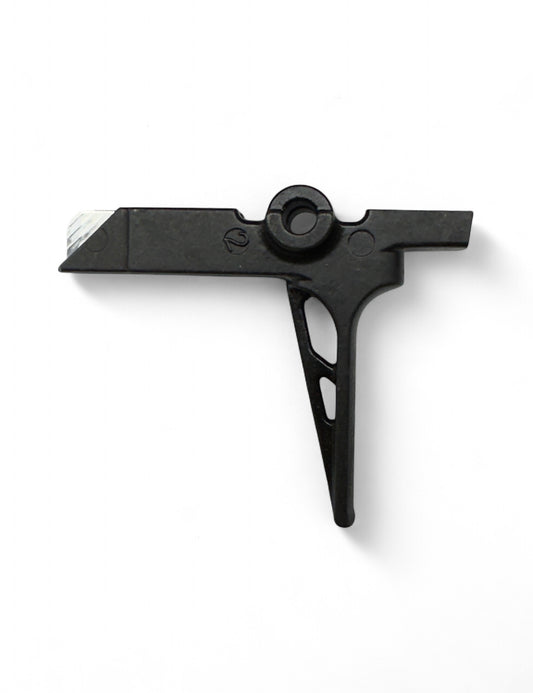
If the cam doesn't have a clean surface to seat into on the trigger body, the system can't engage properly. Check that your trigger has the Super Safety cam cut, a small notch or relieved area on the trigger body where the cam indexes.
Fix: If the trigger is uncut, send it in for our trigger cutting service. If you're not sure, contact us with the trigger make/model, and we'll tell you.
Problem 2: Inconsistent Reset Works Sometimes, Not Others
Symptom: The trigger resets most of the time but randomly fails. Tends to get worse when firing fast or when the rifle is hot.
Cause: Borderline buffer weight for your gas system
This is the H1/H2 borderline situation. Your buffer is just barely heavy enough to work under normal conditions, but when the rifle heats up (gas dynamics change slightly) or you're pushing a faster cadence, timing slips.
Fix: Go up one buffer weight. H1 to H2, or H2 to H3. This should be the first thing you try.
Cause: Overgassed upper with lighter buffer
Factory uppers are often tuned to run reliably with carbine buffers, which can mean they're intentionally overgassed. When you add the Super Safety and a heavier buffer, the rifle usually smooths out but if you haven't upgraded the buffer yet, the excessive gas is driving the BCG faster than ideal.
Fix: H2 or H3 buffer. If you're already on H3 and still seeing inconsistency, the upper may need an adjustable gas block or reduced gas port.
Cause: Lever engagement surface worn or damaged
Less common, but if you've put significant round count through the system, check the lever tip for wear. The D2 and 4140 steel levers we use are hard-wearing, but severe wear is possible over thousands of rounds at high round counts.
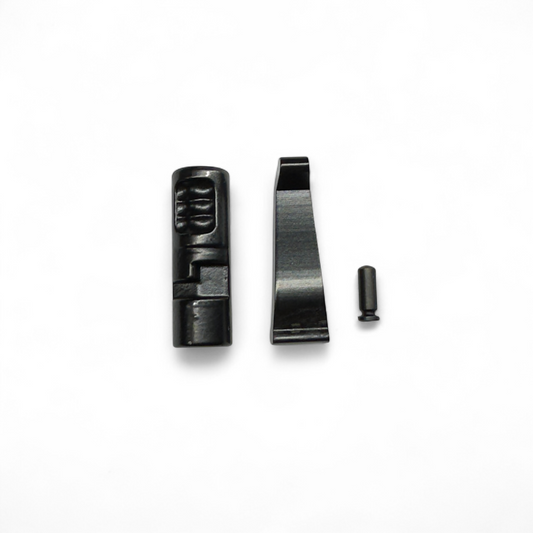
Fix: Replace the lever. We sell replacement levers in a 2-pack for $40, or grab the full Cam, Lever & Rounded Detent Kit for $75.
Problem 3: Hammer Follow
Symptom: The hammer follows the bolt carrier forward instead of catching on the disconnector. Results in a light strike or no strike.
Cause: Disconnector not seated or spring missing
Hammer follow is almost always a disconnector problem, not a Super Safety-specific issue. Check that the disconnector is seated properly on the trigger body with its spring in place. The disconnector spring is small and easy to lose or misfeed during install.
Fix: Disassemble the FCG and reinstall the disconnector carefully, making sure the spring is oriented correctly and the disconnector pivots freely.
Cause: Trigger pin walking
If the trigger pin isn't retained properly, it can walk slightly under recoil and cause inconsistent FCG geometry. KNS anti-rotation pins solve this permanently if it's a recurring issue.
Problem 4: Selector Binds or Doesn't Click Into Position
Symptom: The safety selector is stiff, won't rotate to fire, or doesn't click definitively into safe or fire.
Cause: Cam not centered in receiver
The cam needs to be centered left-to-right in the receiver. If it's pushed too far to one side, it can bind against the receiver wall when the selector is rotated.
Fix: Drop the grip and remove the selector. Reposition the cam so it sits evenly in the center of the receiver. You should be able to feel it drop into a natural centered position when the selector is seated.
Cause: Wrong detent or detent spring
The rounded detent included with the Super Safety is required. A standard AR-15 safety detent is not the correct shape and will cause the selector to bind or feel gritty at the engagement points.
Fix: Use the rounded detent from your Super Safety kit. If you lost it or installed the wrong one, it's included in the Cam, Lever & Detent Kit.
Problem 5: System Works Dry But Fails Live
Symptom: Everything checks out during dry fire. First shot or first mag, reset failures start.
This is almost always buffer weight. Dry fire doesn't replicate the actual BCG velocity under gas pressure. A buffer that seems to work in dry-fire timing may be completely inadequate when the BCG is actually cycling at full gas speed. Upgrade to H2 or H3 and test again. This solves the problem in the vast majority of cases.
Problem 6: Lower Receiver Incompatibility
Symptom: Lever physically can't move through its full arc. Selector won't rotate past a certain point. Lever visually binds against receiver material.
This is a high-shelf lower. Some lowers (especially older designs and certain state-compliant builds) have material behind the safety selector hole that physically blocks the lever. The Super Safety requires a low-shelf lower with clearance behind the safety selector hole.
Fix: A competent gunsmith can mill the shelf down. Alternatively, use a standard low-shelf mil-spec lower. Most modern commercial lowers from Aero, Anderson, PSA, BCM, and similar brands are low-shelf and fully compatible.
Quick Diagnostic Reference
|
Symptom |
Most Likely Cause |
First Fix |
|
Dead trigger after firing |
Buffer too light |
Upgrade to H2 or H3 buffer |
|
Intermittent reset failure |
Borderline buffer / overgassed |
Go up one buffer weight |
|
Hammer follow |
Disconnector issue |
Inspect and reseat disconnector + spring |
|
Selector binds |
Wrong detent or off-center cam |
Use rounded detent; recenter cam |
|
Works dry, fails live |
Buffer too light |
Upgrade to H2 or H3 buffer |
|
Lever physically can't move |
High-shelf lower |
Mill shelf or use low-shelf lower |
|
No reset / feels wrong post-install |
Lever backwards |
Tip to buffer tube, bend to magwell — reinstall lever |
Still Having Issues?
If you've worked through this list and still can't isolate the problem, reach out. Tell us your buffer weight, BCG type, barrel length, gas system, and whether you're suppressed, that context lets us diagnose fast.
You can also check our install guide to verify installation and our buffer guide for tuning.
Need replacement parts? Cam, Lever & Detent Kits, replacement levers, and complete Super Safety Kits are all in stock.