Is the Super Safety Trigger Legal? A State-by-State Guide for 2026
Short answer: Yes, the Super Safety is federally legal. It operates as a semi-automatic firearm, one round per trigger pull, which keeps it fully within the bounds of federal law. But state laws vary, and it's worth knowing exactly where you stand before you buy.
This guide covers why the Super Safety is federally compliant, how it differs from banned devices, and gives you a full state-by-state breakdown of legality as of 2026.
Disclaimer: This post is for informational purposes only and does not constitute legal advice. Firearms laws change. Always consult a licensed attorney in your state before making any purchase or modification.
Why the Super Safety Is Federally Legal
The Super Safety is not a machine gun conversion device. That's the legal question that matters most under federal law, and the Super Safety clears it cleanly.
Under 26 U.S.C. § 5845(b), a "machinegun" is defined as any weapon that fires more than one round by a single function of the trigger. The Super Safety does not do this. Every round fired still requires a deliberate, individual pull of the trigger. That's the legal line, and the Super Safety stays on the right side of it.
What the Super Safety Actually Does
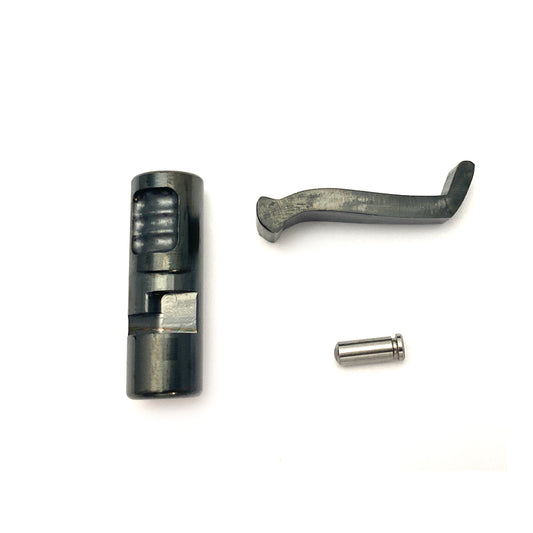
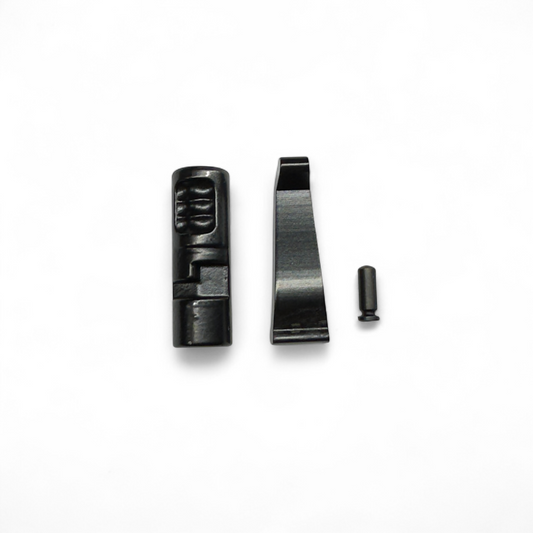
The Super Safety uses a cam and lever mechanism that rides on the bolt carrier group (BCG) to accelerate trigger reset. When the BCG cycles rearward after firing, it strikes the lever, which momentarily engages the safety cam and resets the trigger. As the BCG returns to battery, the system is ready to fire again, faster than a standard trigger, but still requiring one pull per round.
If you want the full mechanical breakdown, read our post on What Is the Super Safety Trigger.
How It Compares to Banned Devices
Here's why the Super Safety is different from devices the ATF has ruled as illegal machine gun conversions:
- Auto sears / DIAS: Allow continuous fire from a single trigger pull. The Super Safety does not.
- Bump stocks (banned 2019): Used recoil energy to repeatedly actuate the trigger mechanically without separate trigger pulls. Courts and ATF classified these as effectively defeating the trigger-pull requirement.
- Certain FRT interpretations: Some forced reset triggers were argued by ATF to constitute machine guns because the trigger reset was mechanically forced mid-cycle. The Super Safety's design is distinct; it uses the safety selector cam, not trigger manipulation, to achieve reset.
The Super Safety's design relies on your finger pulling the trigger each time. The cam-and-lever system accelerates how quickly that pull can happen. It does not eliminate the requirement. That distinction is what keeps it on the legal side of federal law.
Note: We are not lawyers, and this is not legal advice. ATF classifications can change. Stay current with ATF guidance and consult an attorney for your specific situation.
Super Safety Legality by State: 2026 Table
Federal law is the floor, not the ceiling. States can and do impose additional restrictions on firearms and accessories. Below is our best-effort guide to state-by-state status as of 2026. We've sorted each state into one of three categories:
- Legal (✓): No state-level laws we're aware of that would restrict a federally legal semi-automatic trigger system.
- Restricted (✗): The state has broad assault weapon statutes, trigger device bans, or other laws that may restrict the Super Safety. Do not purchase without consulting a local attorney.
- Verify (⚠): Laws are evolving, ambiguous, or locally complex. We recommend verification with a local attorney before purchasing.
|
State |
Status (2026) |
Notes |
|
Alabama |
✓ Legal |
No state-level restrictions on semi-auto triggers |
|
Alaska |
✓ Legal |
No additional restrictions beyond federal law |
|
Arizona |
✓ Legal |
No state-level restrictions |
|
Arkansas |
✓ Legal |
No state-level restrictions |
|
California |
✗ Restricted |
Assault weapon laws: Verify with a local attorney before purchasing |
|
Colorado |
✓ Legal |
No state-level restrictions on semi-auto triggers |
|
Connecticut |
⚠ Verify |
Assault weapon statutes are broad: consult an attorney |
|
Delaware |
✓ Legal |
No state-level trigger restrictions |
|
Florida |
✓ Legal |
No state-level restrictions on semi-auto triggers |
|
Georgia |
✓ Legal |
No state-level restrictions |
|
Hawaii |
⚠ Verify |
Strict firearms laws: consult a local attorney |
|
Idaho |
✓ Legal |
No state-level restrictions |
|
Illinois |
✓ Legal |
No specific trigger restrictions; local ordinances may vary |
|
Indiana |
✓ Legal |
No state-level restrictions |
|
Iowa |
✓ Legal |
No state-level restrictions |
|
Kansas |
✓ Legal |
No state-level restrictions |
|
Kentucky |
✓ Legal |
No state-level restrictions |
|
Louisiana |
✓ Legal |
No state-level restrictions |
|
Maine |
✓ Legal |
No state-level restrictions |
|
Maryland |
⚠ Verify |
The regulated firearms list is broad: consult an attorney |
|
Massachusetts |
✗ Restricted |
AW laws and copy-cat statutes: consult an attorney before purchasing |
|
Michigan |
✓ Legal |
No state-level restrictions |
|
Minnesota |
✓ Legal |
No state-level restrictions |
|
Mississippi |
✓ Legal |
No state-level restrictions |
|
Missouri |
✓ Legal |
No state-level restrictions |
|
Montana |
✓ Legal |
No state-level restrictions |
|
Nebraska |
✓ Legal |
No state-level restrictions |
|
Nevada |
✓ Legal |
No state-level restrictions |
|
New Hampshire |
✓ Legal |
No state-level restrictions |
|
New Jersey |
✗ Restricted |
Among the most restrictive AW laws in the US: consult an attorney |
|
New Mexico |
✓ Legal |
No state-level restrictions |
|
New York |
✗ Restricted |
SAFE Act and AW statutes: consult an attorney before purchasing |
|
North Carolina |
✓ Legal |
No state-level restrictions |
|
North Dakota |
✓ Legal |
No state-level restrictions |
|
Ohio |
✓ Legal |
No state-level restrictions |
|
Oklahoma |
✓ Legal |
No state-level restrictions |
|
Oregon |
⚠ Verify |
Recent legislation: consult an attorney for current status |
|
Pennsylvania |
✓ Legal |
No state-level restrictions |
|
Rhode Island |
⚠ Verify |
Consult local attorney; regulations evolving |
|
South Carolina |
✓ Legal |
No state-level restrictions |
|
South Dakota |
✓ Legal |
No state-level restrictions |
|
Tennessee |
✓ Legal |
No state-level restrictions |
|
Texas |
✓ Legal |
No state-level restrictions |
|
Utah |
✓ Legal |
No state-level restrictions |
|
Vermont |
✓ Legal |
No state-level restrictions on semi-auto triggers |
|
Virginia |
✓ Legal |
No state-level restrictions |
|
Washington |
⚠ Verify |
Evolving AW legislation: consult an attorney |
|
West Virginia |
✓ Legal |
No state-level restrictions |
|
Wisconsin |
✓ Legal |
No state-level restrictions |
|
Wyoming |
✓ Legal |
No state-level restrictions |
This table is for general informational purposes only. Laws change. Restricted/Verify classifications are conservative — always confirm with a licensed attorney in your state before purchasing.
What About Local Ordinances?
Even in states we've marked as Legal, certain counties and cities can impose additional restrictions. Chicago, for example, has local firearms ordinances that go beyond Illinois state law. If you're in a major metro area, especially in states with historically strict gun laws, it's worth a quick check with a local attorney or your county sheriff's office.
As a general rule, if your state is on the Restricted or Verify list, treat that as a hard stop before purchasing.
Frequently Asked Questions
Is the Super Safety the same as a forced reset trigger (FRT)?
They use similar principles — both use the BCG's cycling motion to speed up reset — but they're mechanically different systems. The Super Safety uses a cam and lever attached to the safety selector, not a modification to the trigger group itself. For a full side-by-side, read our Super Safety vs FRT comparison.
Has the ATF ruled on the Super Safety specifically?
As of the time of this writing, there is no specific ATF ruling targeting the Super Safety by name. The system operates as a semi-automatic trigger — one round per trigger pull — which is the controlling legal standard. That said, ATF interpretations of firearms accessories have shifted in recent years, so staying current with ATF guidance is always smart practice.
Can I ship a Super Safety to any state?
We ship to all states where we're not aware of legal restrictions. For states marked Restricted or Verify in the table above, we strongly recommend confirming legality with a local attorney before placing an order. Ultimately, the buyer is responsible for knowing and complying with their state and local laws.
Does the Super Safety require an NFA tax stamp or registration?
No. The Super Safety is not an NFA item. It is not a silencer, short-barreled rifle, destructive device, or machine gun conversion part. No tax stamp, no registration, no CLEO notification required.
What happens if laws change in my state?
That's exactly why this guide is dated 2026 and will be updated as things change. Bookmark this page and check back. If you've already purchased and your state law subsequently changes, consult an attorney about your options. In many cases, grandfathering provisions apply — but that varies by state and situation.
Bottom Line
The Super Safety is federally legal and legal in the majority of U.S. states. It operates as a semi-automatic system, one pull, one round, which is the standard that determines federal compliance. In states with broad assault weapon statutes, you'll want to verify before buying.
If you're in a green state and ready to upgrade your AR-15 trigger setup, we've got you covered.
Browse our complete Super Safety Kits — from our budget-friendly mil-spec setup to the premium Geissele SSA-E kit — and find the right build for your rifle.